
Welcome to Behind the Barn Doors
Welcome to the first edition of Behind the Barn Doors. Every few months, I'd like to pull back the curtain on some of what happens between programs—the conversations, decisions, unexpected challenges, and quiet victories that rarely make the news but are every bit as much a part of the Barns' story.
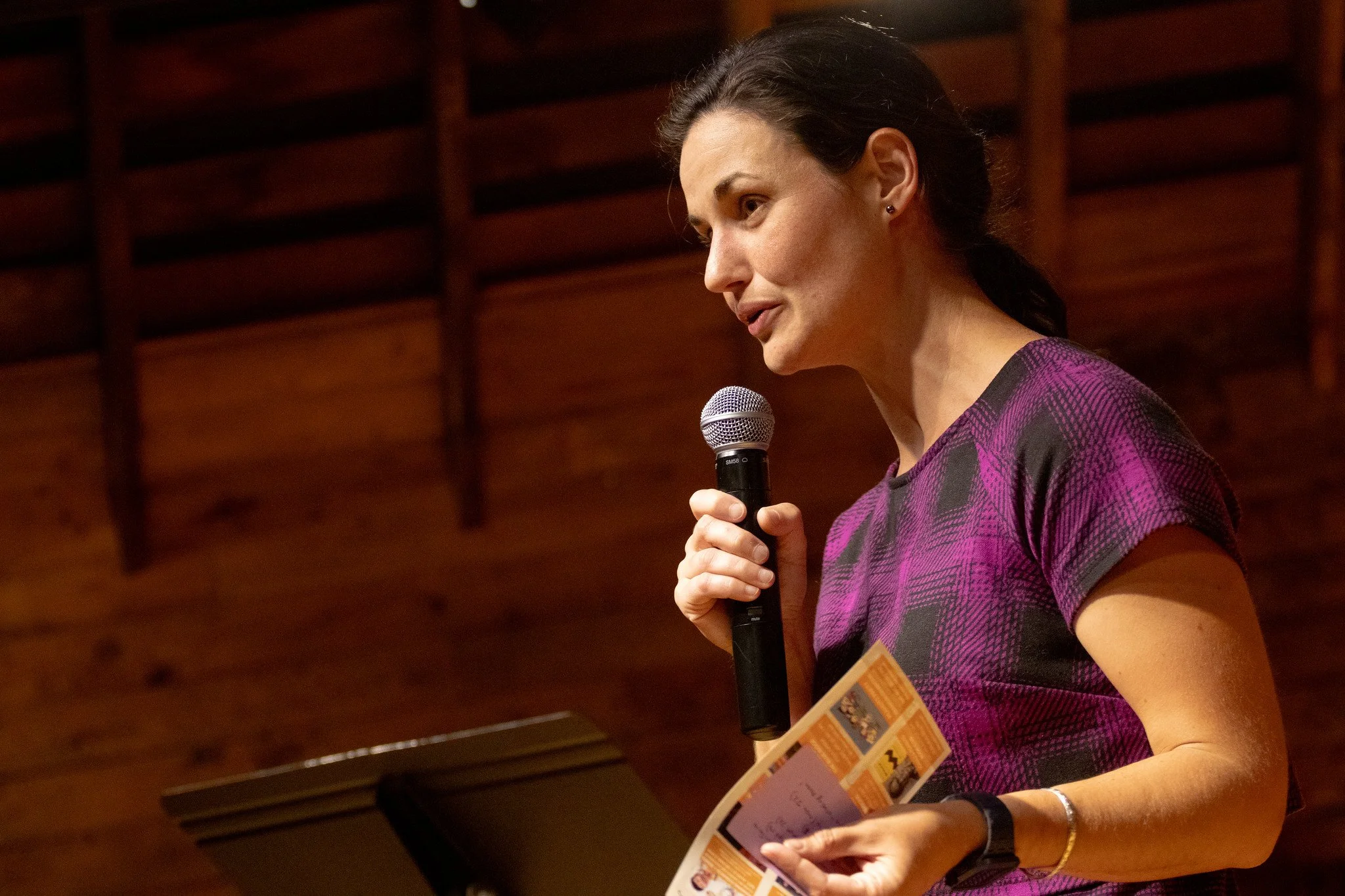
Martha Reynolds addresses the audience before the Appalachian Chamber Music Festival's annual performance. Photo by Brian Christopher.
Behind the Barn Doors: Programs Begin Long Before the Doors Open
When you visit the Barns, I hope it feels effortless. You arrive, greet a few friends, admire an exhibition, find your seat, and settle in for the program you've come to enjoy.
If that's your experience, then we've done what we set out to do.
Because behind that seemingly effortless visit are hundreds of small decisions—some planned months in advance, others made in a matter of minutes—all with one goal: creating a welcoming space for our audiences, artists, and community.
This spring brought several reminders of just how much happens before the doors open.
Take our elevator, for example.
One Friday afternoon, just before a busy weekend—including a sold-out Sunday matinee—our elevator decided it was done cooperating. The doors simply refused to close. We were faced with a choice: wait until Monday for a standard service call or authorize an emergency visit from the on-call technician.
The timing may have been difficult, but the decision was easy.
As it turned out, the culprit wasn't some catastrophic mechanical failure. A tiny piece of mortar had broken loose and slipped into the door jamb. With the mortar removed, the elevator resumed its essential—albeit slow—ferry from bottom to top and back again, with time to spare.
Most people never would have guessed there was a problem.
And, honestly, that's the outcome we're always hoping for. Because, after all, historic buildings have an uncanny ability to remind you of their tender age at the most inconvenient moments.
Fortunately, not every behind-the-scenes story begins with catastrophe. Some are many months in the making.
In May, we dedicated a memorial bench to Geneva Jackson with a small ceremony surrounded by family and friends.
Known throughout the community for her generosity, volunteer service, and, of course, her exemplary baked goods, Geneva’s desserts became a beloved tradition at countless nonprofit fundraisers, including many of our own—ultimately raising tens of thousands of dollars in support of local causes.
Geneva’s daughter cut the ceremonial ribbon—scissors freshly sharpened for the occasion—and guests were invited to jot down their favorite memories, which were compiled into a keepsake for the family.
The gathering was a touching reminder that the Barns is so much more than an arts venue. It’s a place where the community comes to connect.
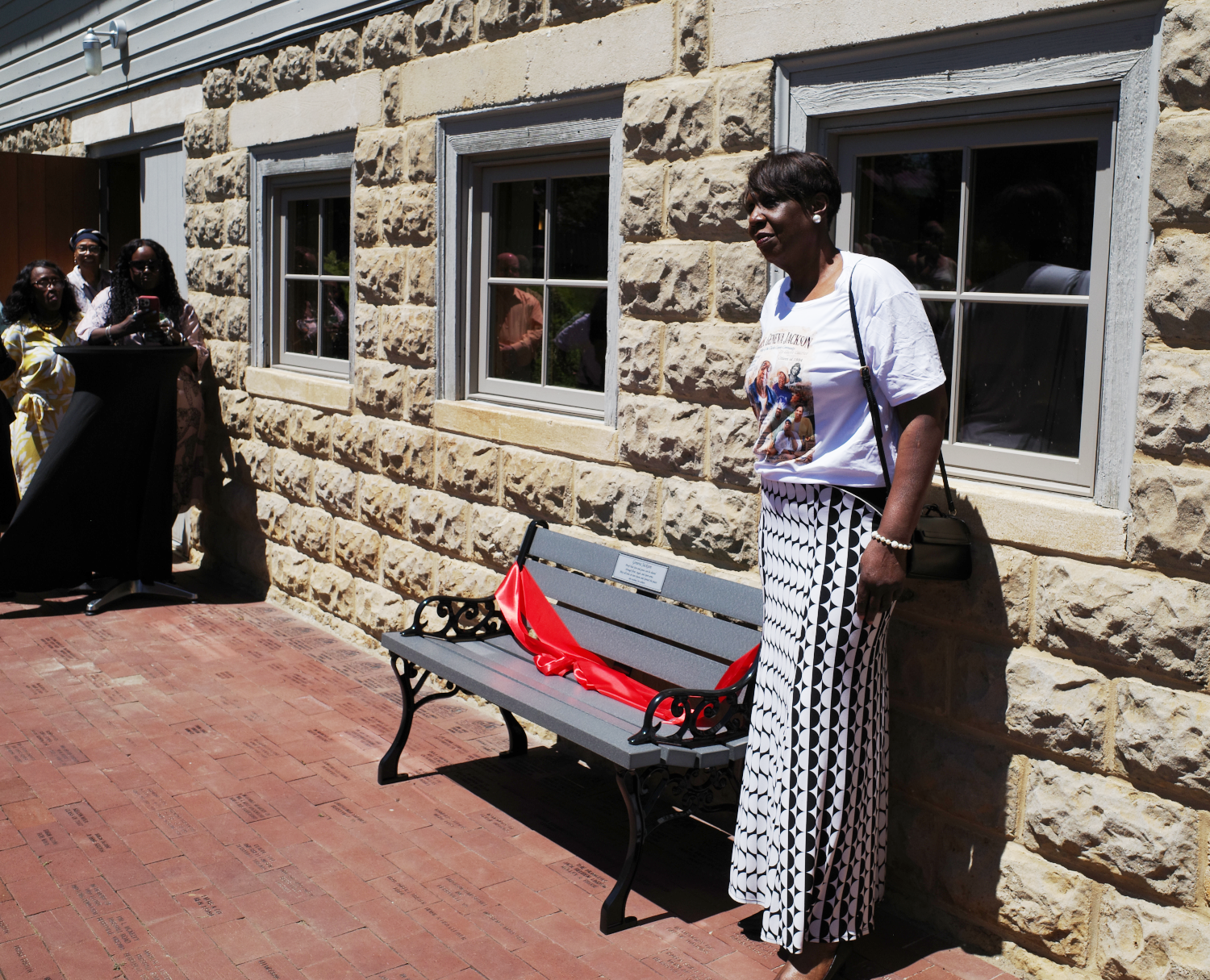
Paula Brooks, daughter of Geneva Jackson, cuts the ceremonial ribbon during the dedication of the Geneva Jackson Memorial Bench on May 31, 2026.
The result of months of collaboration among staff, board members, family, and community partners, the bench will endure as a symbol of a life well lived.
That same sense of collaboration has permeated our partnership with the Clarke County VA250 Committee, a multi-year effort that has culminated in a wide variety of commemorative programs. For our part, we have continued to ask how the Barns can help tell our nation's story through the arts.
That question led me to Keith Rocco, one of the nation's foremost historical painters, now a resident of Shenandoah County, whose work was recently featured in Ken Burns’ The American Revolution.
After seeing his work highlighted at VECCA and happening upon one of his paintings at Art at the Mill, I invited him to the Barns for a visit. What began as a tour quickly evolved into an afternoon of brainstorming—not only about a Revolutionary War exhibition this fall, but about other ideas we hope to explore in the year ahead.
So as you walk through the gallery this fall, I hope you'll enjoy not only the art on display but the research, relationships, and shared enthusiasm that made it possible.
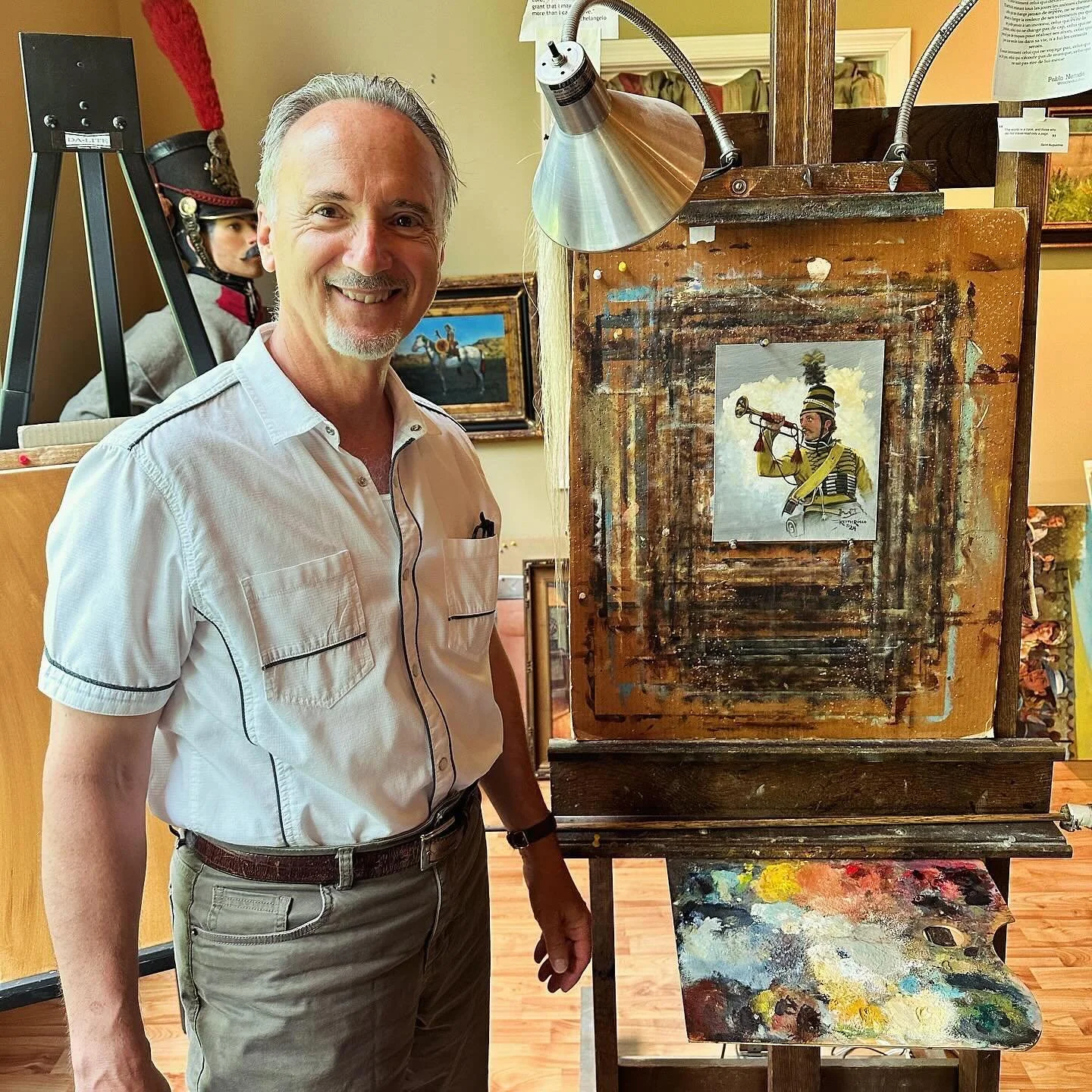
Keith Rocco, pictured in his studio. Photo by John Fenzel.
It may feel effortless, but it’s done with intention. And that's true of so much of what happens here.
Between programs, we're refining board policies, reviewing budgets, writing grants, planning exhibitions, preparing for our next fundraiser, and solving whatever surprise the building has in store for us. None of those things happen in isolation; together, they're what lend a sense of ease to your visits.
And that same spirit of intentionality is already guiding plans for our 15th Anniversary Gala this September. We've been looking back at past events, asking what worked well, where we can improve, and how every decision—from the menu to the music to the auction—can make the evening both more enjoyable and more successful in supporting our mission. Good fundraising, much like good programming, rarely happens by accident.
If this letter has a theme, it's that meaningful work often happens out of sight. Few people embody that better than our Director of Operations & Programs, Nathan Borger. In May, Nathan celebrated ten years with the Barns of Rose Hill. If you've attended a program during that time, chances are Nathan has had a hand in making it happen. His dedication, steady presence, and willingness to tackle whatever needs doing have helped shape the Barns into the organization it is today, and it’s a pleasure to work alongside him.
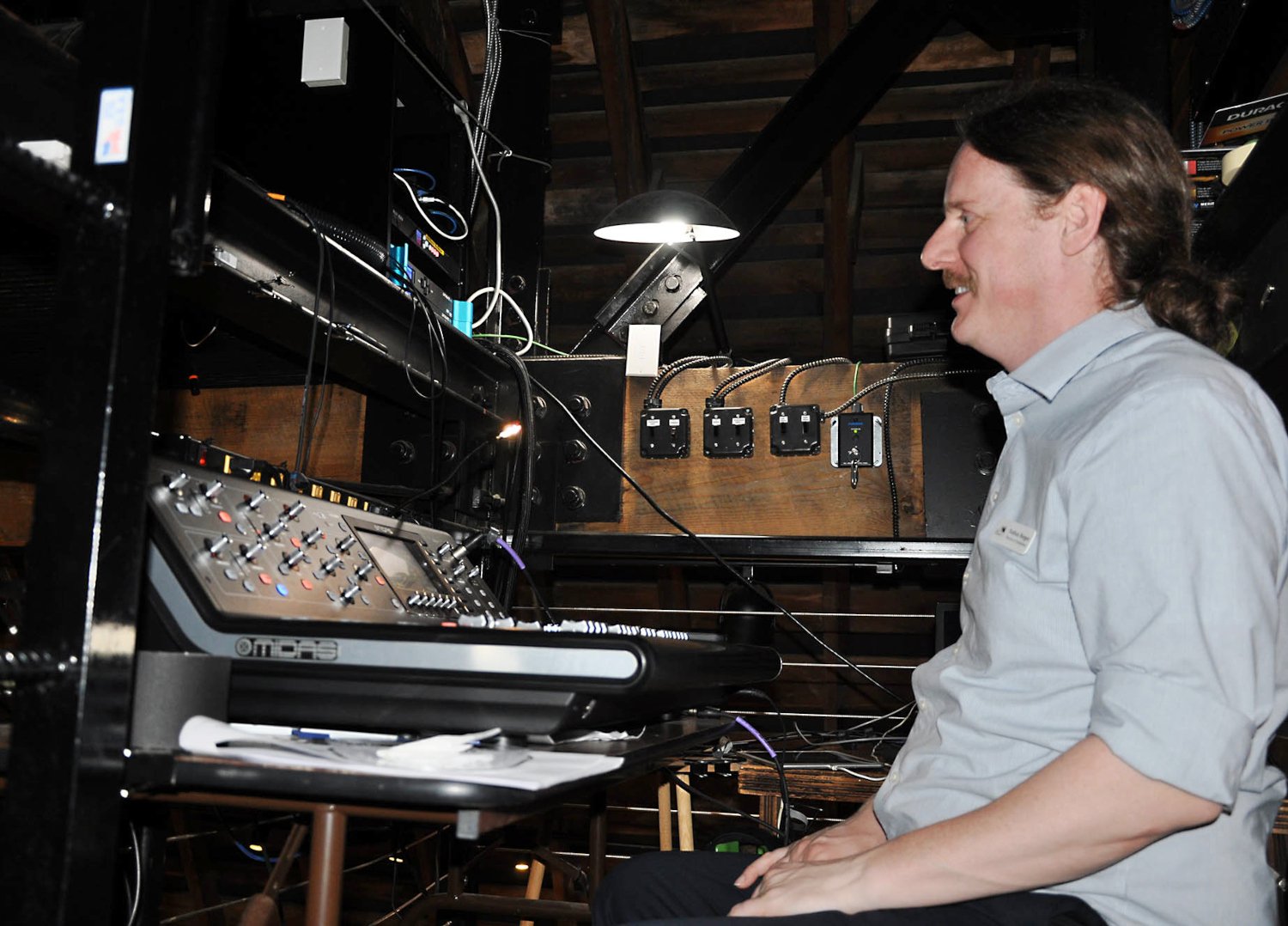
Nathan Borger watches over a program from the sound booth. Photo by Cathy Kuehner.
Before I close, one small teaser for those of you who’ve stayed.
By the time the next edition of Behind the Barn Doors lands in your inbox, I hope to be sharing news about the successful conclusion of our ten-year endowment campaign—a milestone years in the making and one that will help sustain the Barns for generations to come.
Until then, thank you for making all of this possible. Whether your support comes through attending programs, renewing your membership, volunteering your time, sponsoring a program, or making a gift, you're helping create far more than the few hours you spend with us. You're enabling everything that happens before the doors open.
Until next time,
Martha Reynolds
Executive Director